Development of early film
The magic lantern was invented in 1650; it consisted of a
oil painting, a simple lens and a candle or oil lamp. In a darkened room, the
image would appear projected onto a flat surface. It was often used to project
frightening images in order to convince people that they were witnessing the
supernatural. Some slides for the lanterns contained moving parts which makes
the magic lantern the earliest known example of projected animation.
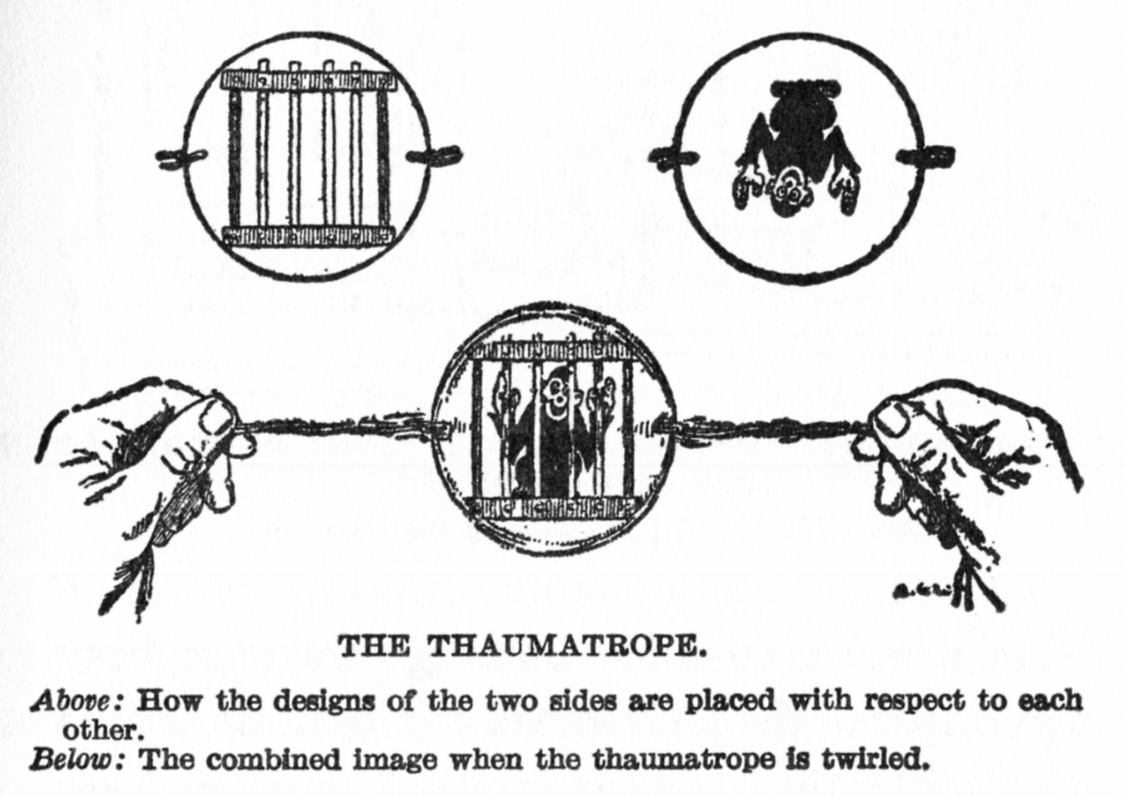
Thaumatrope was a simple toy used in the Victorian times
(1824). A thaumatrope is a small circular disk or card with two different
pictures on each side that was attached to a piece of string or a pair of
strings running through the centre. When the string is twirled quickly between
the fingers, the two pictures appear to combine into a single image.
Phenakistoscope (1831), it consists of a disk with a series
of images, drawn on radii evenly spaced around the centre of the disk. Slots
are cut out of the disk on the same radii as the drawings, but at a different
distance from the centre. The device would be placed in front of a mirror and
spun. As the phenakistoscope is spun, a viewer would look through the slots at
the reflection of the drawings which would only become visible when a slot
passes by the viewer's eye. This created the illusion of animation. This was
similar to the zoetrope but instead of holding to the mirror you just spin it on the floor.
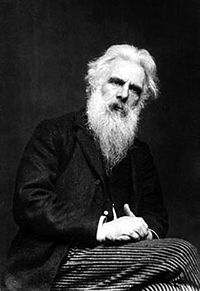
Edward Muybridge was an English photographer important for
his pioneering work in photographic studies of motion and in motion-picture
projection. When he first went to America, he suffered an injury which causes
brain damage and he was sent back to England to recover. Muybridge is known for
his pioneering work on animal locomotion in 1877 and 1878, which used multiple
cameras to capture motion in stop-action photographs. Was commissioned by the
United States Army to photograph the Modoc War in 1873. In 1874 he shot and
killed Major Harry Larkyns, his wife's lover. He travelled for more than a year
in Central America on a photographic expedition in 1875.


